Aging Reports
Aging reports provide an analysis of outstanding receivables and payables categorized by aging buckets. These reports are essential for collection follow-up, cash flow management, and financial planning.
Navigation: Accounting > Reporting > Interactive Accounting Reports
Aged Receivables
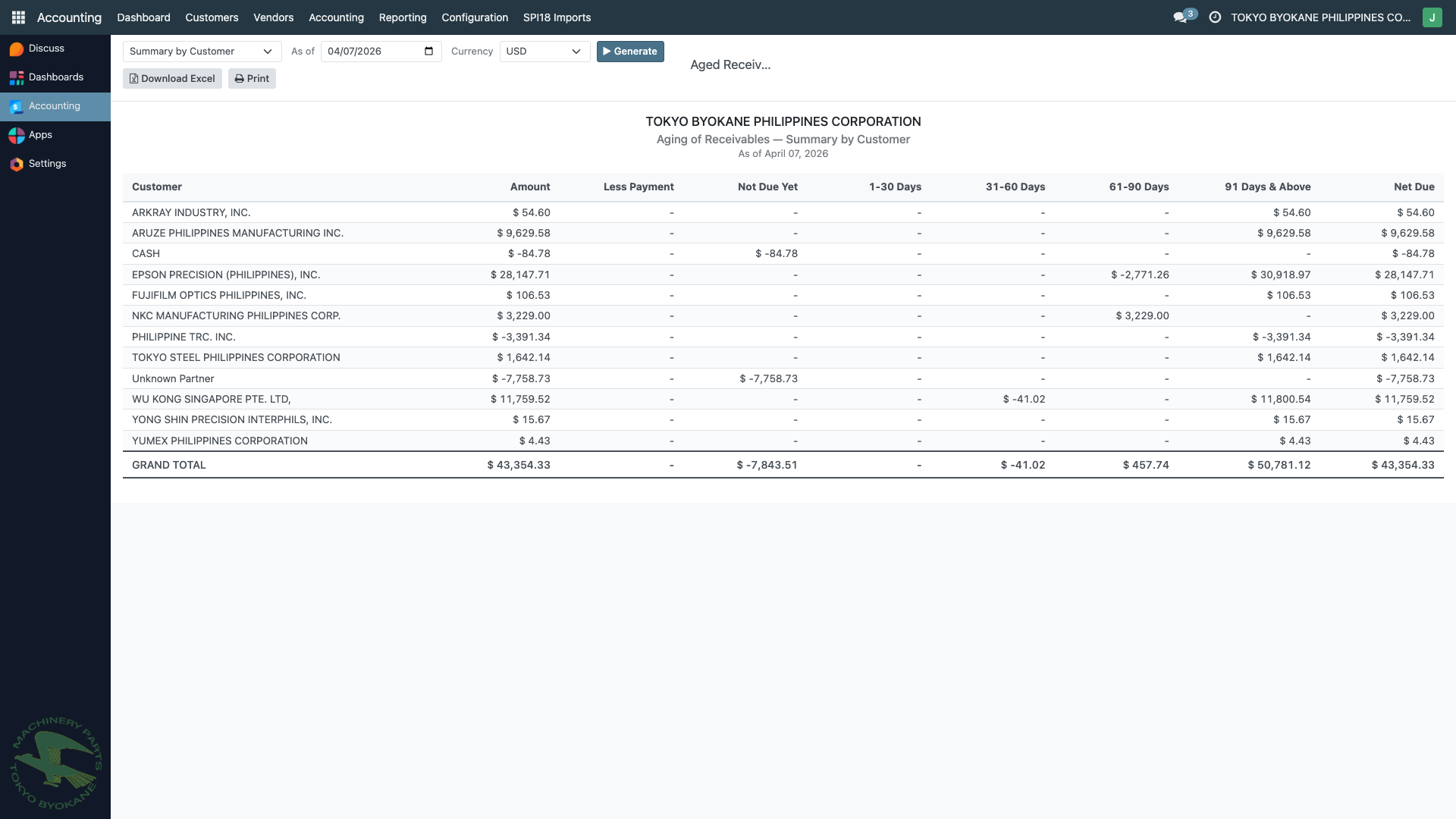
The Aged Receivables report provides an aging analysis of outstanding customer balances, categorized by aging buckets. This is the primary tool for collection officers to prioritize follow-ups.
Report Contents:
- Customer name
- Not Due amount (current, not yet due)
- 1-30 Days overdue
- 31-60 Days overdue
- 61-90 Days overdue
- 91 Days & above
- Grand Total per customer
Use Cases:
- Collection prioritization
- Credit risk assessment
- Bad debt provisioning
- Cash flow forecasting
- Monthly management review
:::tip Drill-Down Click on any amount to view the underlying invoices making up that balance. You can then take action (send reminder, register payment, etc.) directly from the drill-down view. :::
Aged Payables
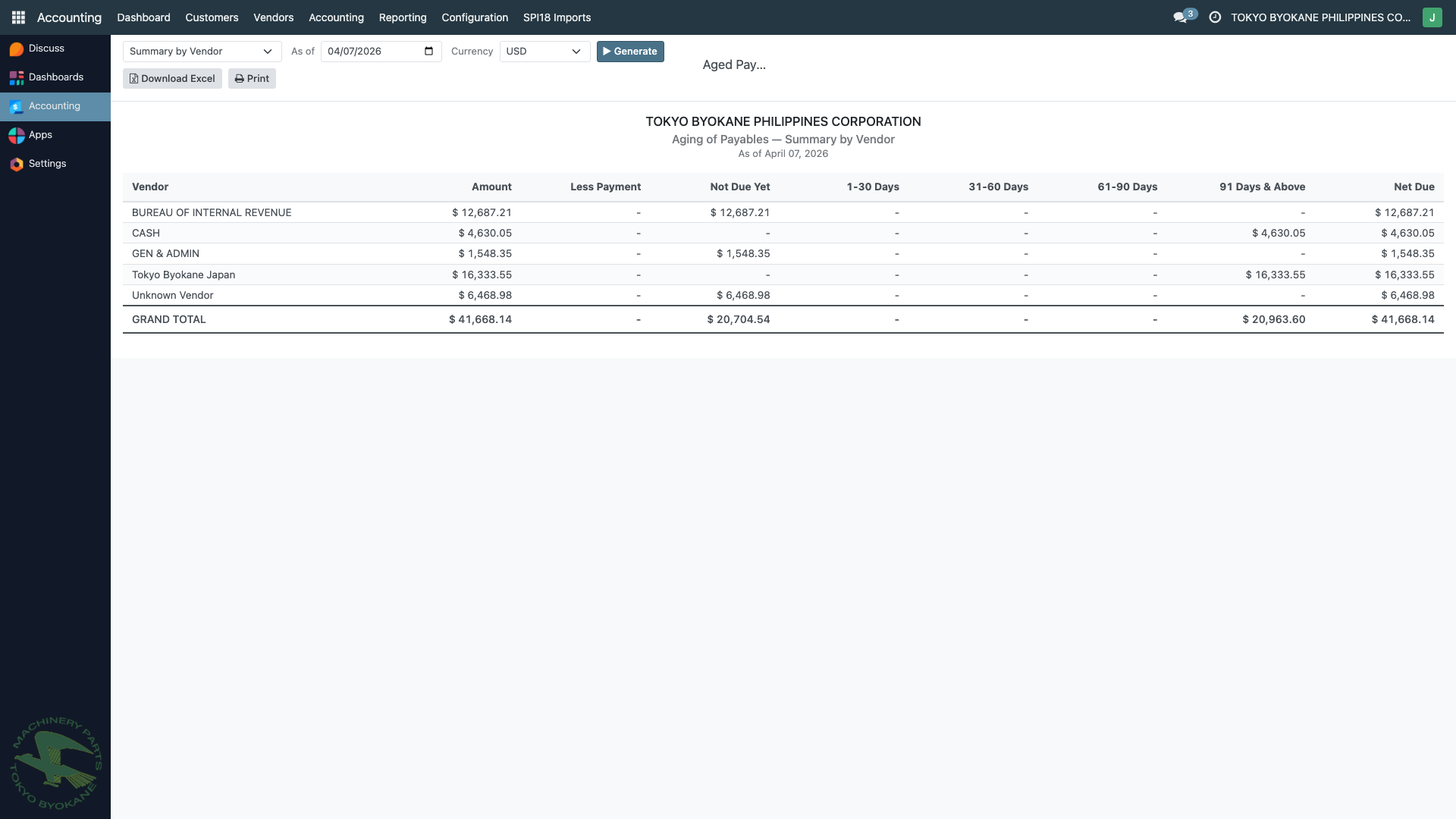
The Aged Payables report provides an aging analysis of outstanding vendor balances with the same aging bucket structure as Aged Receivables.
Report Contents:
- Vendor name
- Not Due amount (current, not yet due)
- 1-30 Days overdue
- 31-60 Days overdue
- 61-90 Days overdue
- 91 Days & above
- Grand Total per vendor
Use Cases:
- Payment planning and prioritization
- Cash flow management
- Vendor relationship management
- Month-end accruals
Aging Bucket Guide
| Bucket | Description | Action |
|---|---|---|
| Not Due | Invoice is within payment terms | Monitor |
| 1-30 Days | Slightly overdue | Send friendly reminder |
| 31-60 Days | Moderately overdue | Follow up actively |
| 61-90 Days | Significantly overdue | Escalate and contact directly |
| 91+ Days | Seriously overdue | Consider collection action or write-off |
:::info Report Frequency Best practice is to generate aging reports weekly for receivables (for collection actions) and monthly for payables (for payment planning). :::